Did you know that Denmark shares a unique relationship with the U.S. Coast Guard? One that formed during the Second World War? As a former U.S. Coast Guardsman, I feel obligated to make the first post on this blog about the connection between Denmark and the U.S. Coast Guard Academy.
At the onset of the Second World War, the Danish Maritime Authorities’ new sail training vessel, Danmark, was luckily in the United States for the 1939 World’s Fair. Had she been in Denmark, her fate may not have been as fortuitous. As Danmark prepared to sail back to Denmark in early April 1940, her home was invaded by the Germans. Captain Knud Hansen made the difficult decision to remain in the United States, rather than make the dangerous voyage across the Atlantic. The crew received a weekly stipend from Danish Ambassador to the United States Henrik Kauffmann, whom we will learn more about later, and donations from Americans. As her crew awaited their return to Denmark, many cadets joined the U.S. merchant marine; 14 would die serving in the Atlantic.
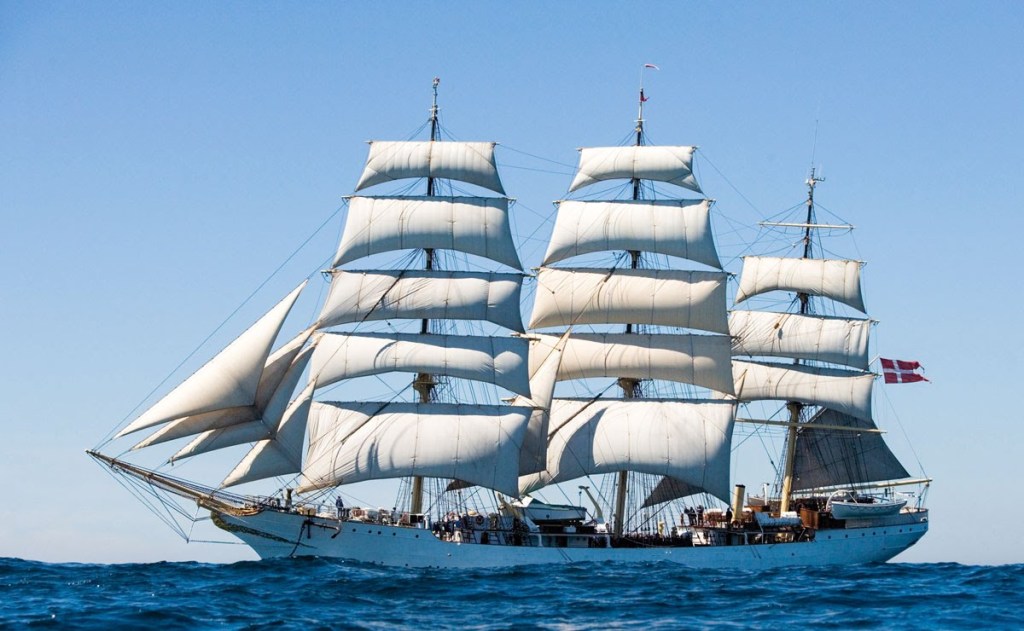
Image courtesy of Museum Ships.
The U.S. Coast Guard was without a sail training vessel as hostilities rose around the globe. Initially, the superintendent of the Coast Guard Academy, Rear Admiral James Pine, and the Commandant of the Coast Guard, Vice Admiral Russell Waesche, sought to purchase Danmark for Academy training. The Danes running the government in exile were not open to the Americans’ offers, so she remained in limbo.
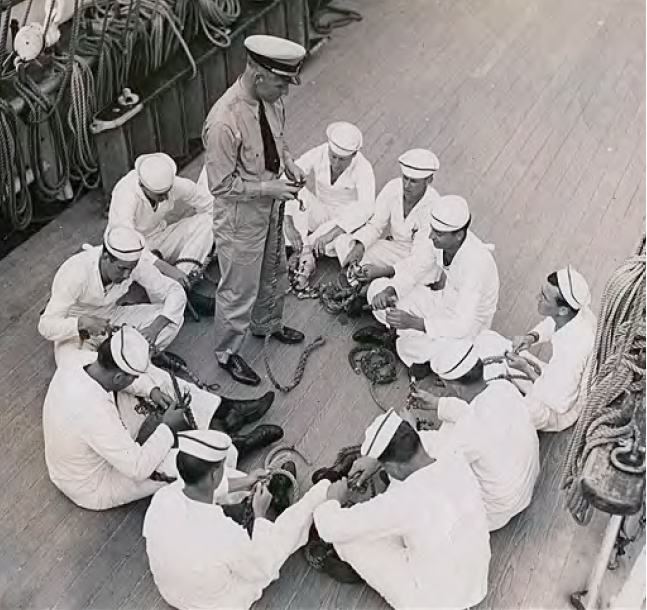
Image courtesy of the U.S. Coast Guard website.
Captain Hansen offered her to the U.S. on loan following the Japanese attack on Pearl Harbor. Within two weeks, Danmark was commissioned as a U.S. Coast Guard vessel after the captain offered her to the U.S. government. She sailed to New London, Connecticut, where she and her crew took the role of training U.S. Coast Guard Academy cadets flying the U.S. flag. During her stay in New London, 5,000 cadets trained and sailed on Danmark. After WWII ended, the U.S. flag was lowered, and the Danish flag was rehoisted over her fantail, marking the end of her service in the U.S. Coast Guard.
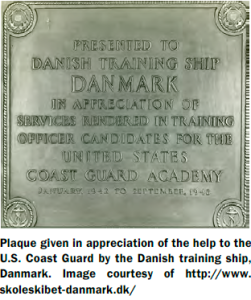
Image courtesy of LeRoy Reinburg Blog.
USCGC Eagle was the ship that replaced Danmark as the sail training vessel for the U.S. Coast Guard. She was herself a product of World War II, originally built by the Germans as Horst Wessel. After her 1936 commissioning, attended by Adolf Hitler, she served as a training vessel, as allowed by the Treaty of Versailles. Following the end of World War II, Horst Wessel and the other barque training vessels that make up the “Five Sisters” were divided between the Allied powers.
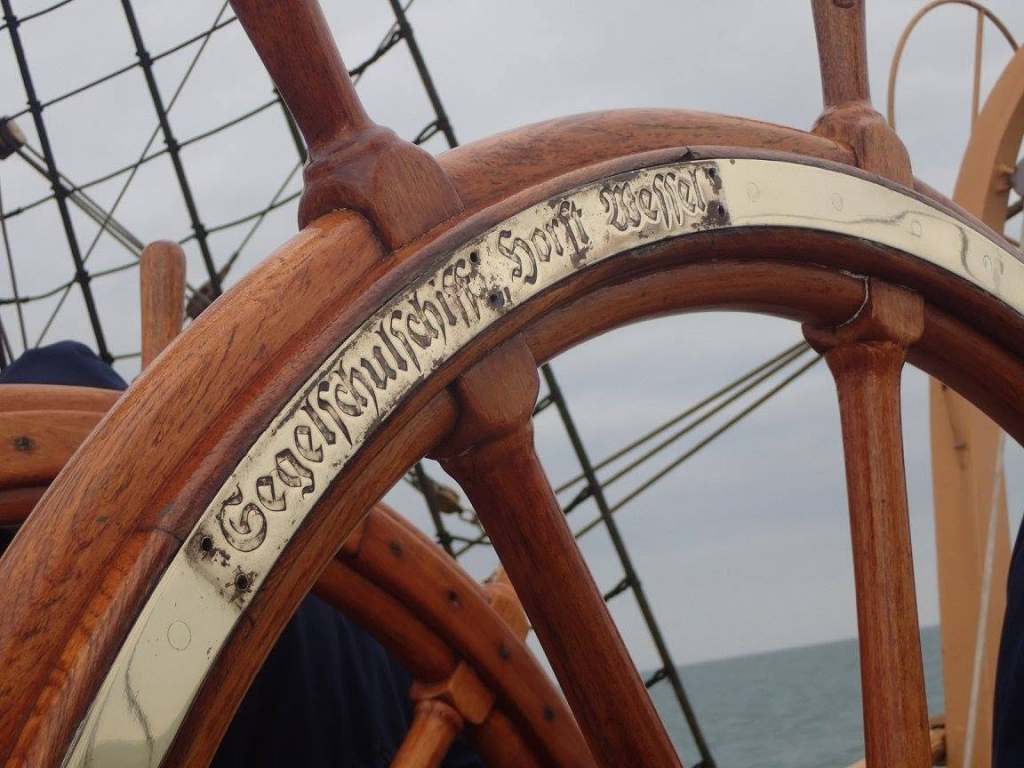
Image from my 2016 sail onboard.
The U.S. Coast Guard Academy proposed that Horst Wessel come to the U.S. to serve as the new sail training vessel for the Coast Guard. The Academy was without a sail training ship, and the opportunity seemed perfect. Following repairs, she took the name Eagle, the seventh ship to bear it, officially entering U.S. service. She made the voyage to the United States in 1946 and was homeported in lovely New London, Connecticut.
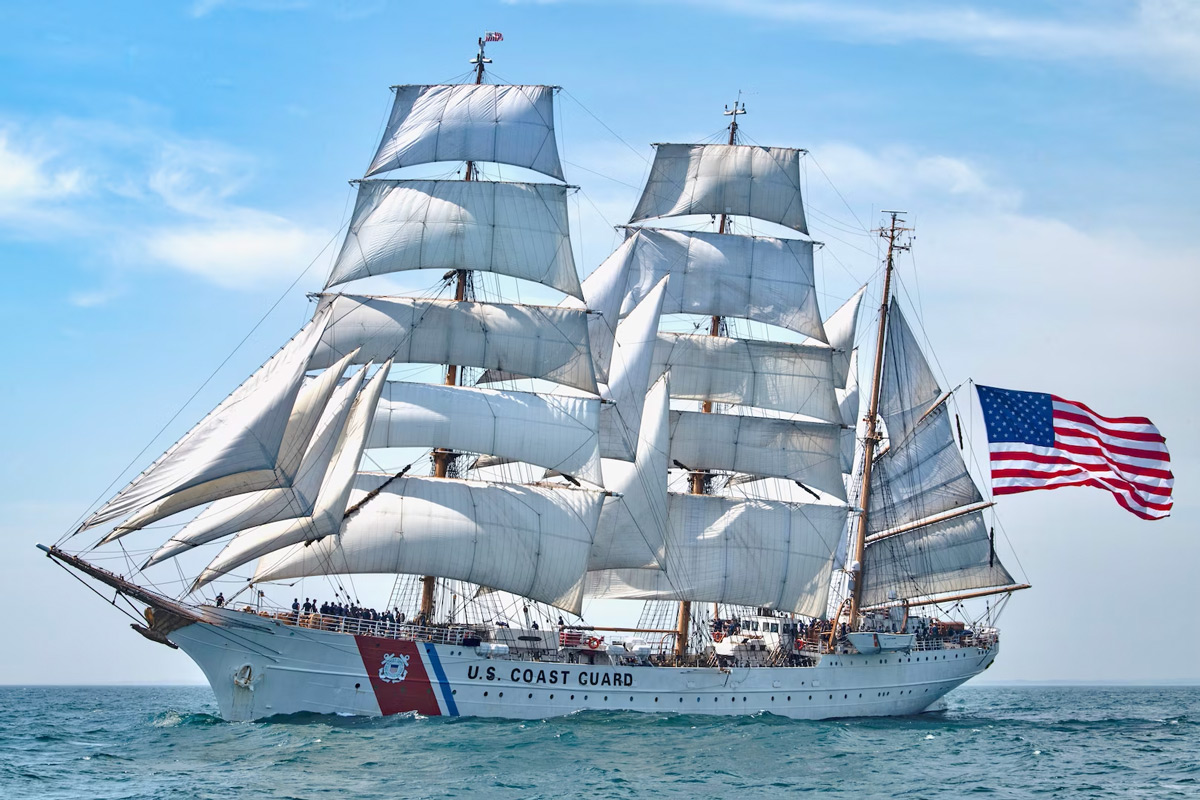
Image courtesy of Sail Boston 2026.
So the Coast Guard gained a new training vessel, and Danmark returned home. Both ships remain in service for their respective countries. Would the Coast Guard have sought a new sail training vessel after the Second World War if they hadn’t used Danmark? Maybe not. The Coast Guard had not had a large sail training vessel since the decommissioning of Alexander Hamilton in the 1930’s. As anyone who has served in the Coast Guard can tell you, money is tight. Even with Eagle, the crew sent to prepare her for her journey were told she couldn’t need repairs that would cost the U.S. government any money. Danmark had shown the benefit of sail training and likely directly influenced the decision to acquire Eagle. Many of those who served as the first instructors on Eagle would have sailed on Danmark as cadets, creating a unique bond between these ships that remains today.
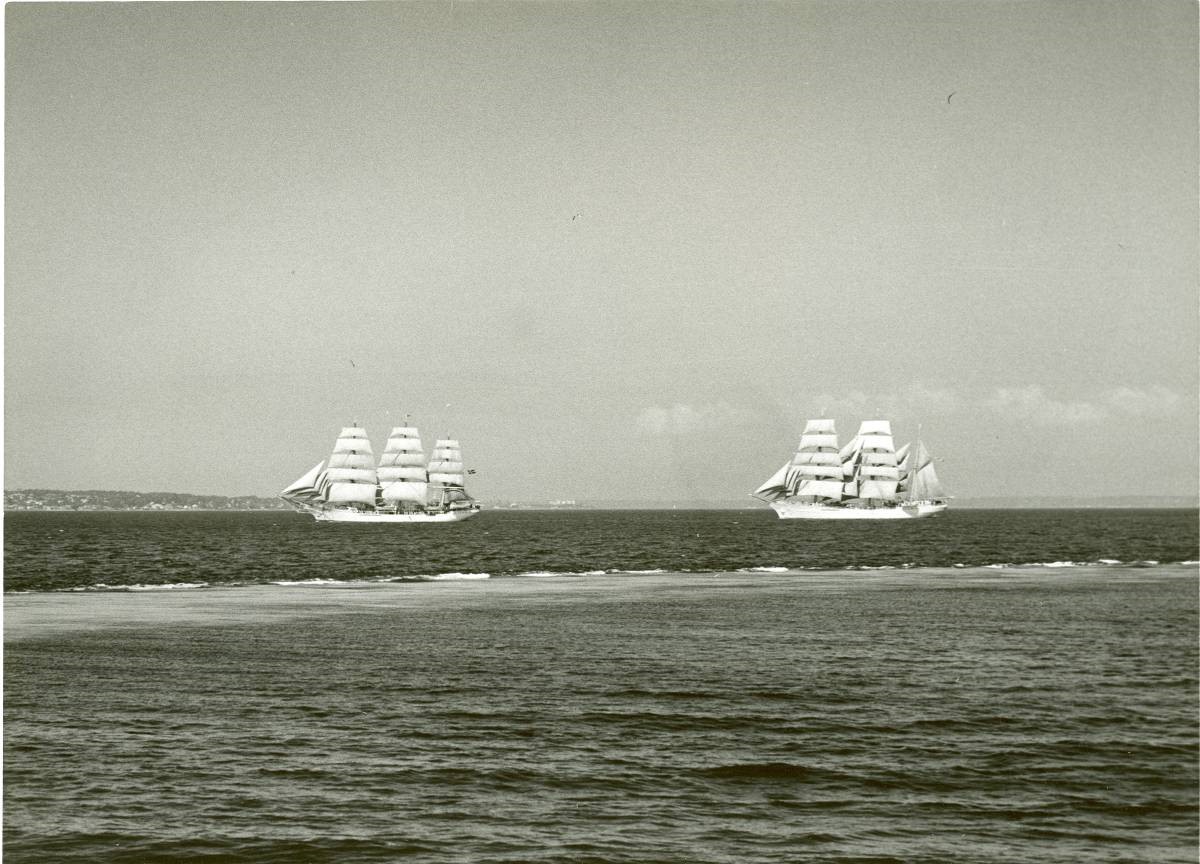
Image courtesy of the U.S. Coast Guard Website.
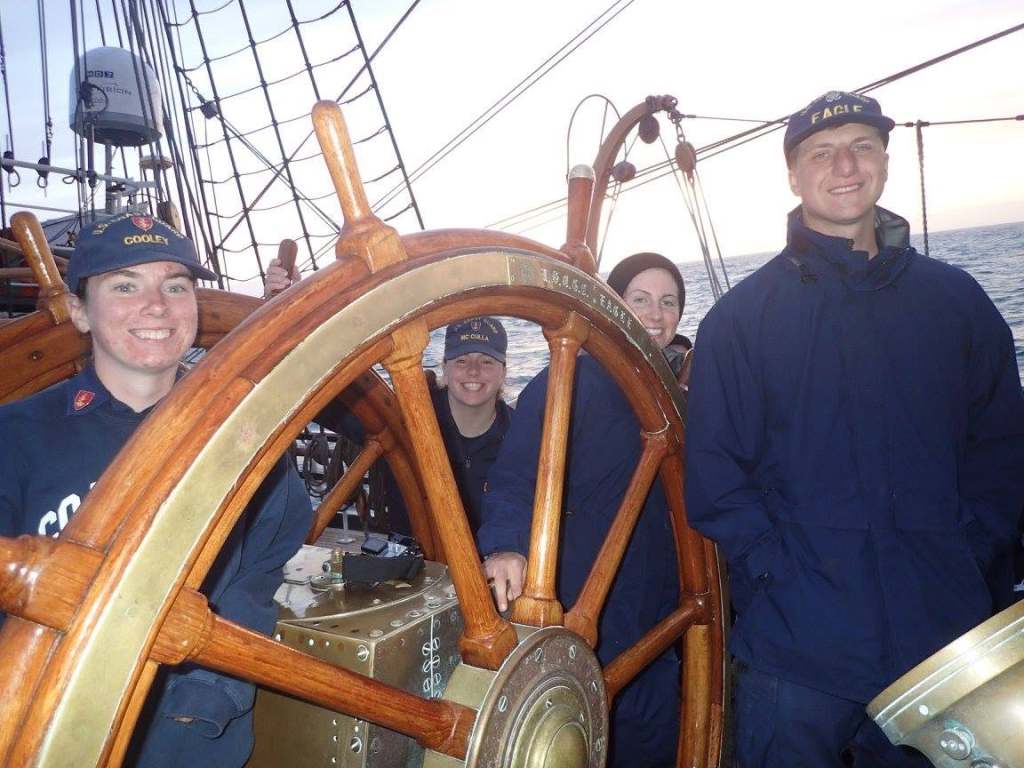
Anyone who has sailed on one of these tall ships will tell you that there is nothing like it. Yes, it is hard work, but they teach you life skills you can’t learn anywhere else. I was lucky enough to sail on Eagle as a Swab around New England and again as a 3/c (freshman summer) from New London to Dublin, Ireland, and again to London, England. I think everyone lucky enough to sail on Eagle owes a debt to Denmark and the crew of Danmark. Had it not been for her, who knows if there would have been Eagle?
Bibliography
Chidlow, Nora L. “The Long Blue Line: Danmark—the Friend-Ship between Denmark and the Coast Guard.” United States Coast Guard, U.S. Coast Guard, July 30, 2021. https://www.mycg.uscg.mil/News/Article/2700634/the-long-blue-line-danmarkthe-friend-ship-between-denmark-and-the-coast-guard/.
NEPTUN’s Knowledge Base. “Skoleskibet Danmark, Denmark’s Full-Rigged Training Ship.” Brigantine NEPTUN, April 25, 2026. https://www.brigantineneptun.com/knowledge-base/skoleskibet-danmark-training-ship/.
Reinburg, Claire. “The Training Ship DANMARK | LeRoy Reinburg, Jr.” LeRoy Reinburg, Jr. Writings by LeRoy Reinburg, Jr. about His Experiences in the U.S. Coast Guard, from WWII through the Vietnam War, September 20, 2015. https://reinburg.net/the-training-ship-danmark/.
Sofrin, Will, and Capt Simon Colley. USCG Cutter Eagle: The Legacy of the Coast Guard’s Flagship. Lyons Press, 2026.


Leave a comment